
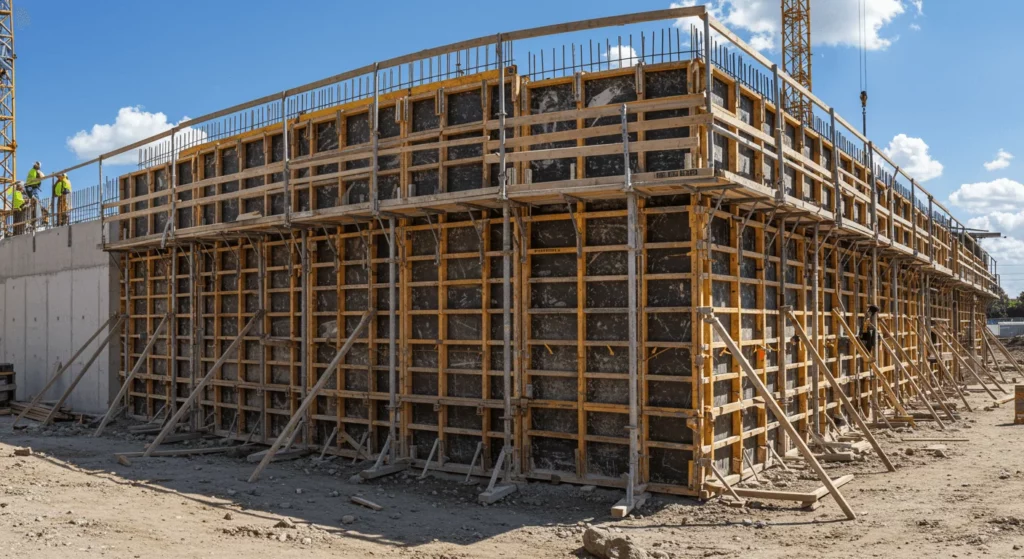
Formply is a type of engineered plywood for concrete formwork that is specifically designed for this purpose. It is made with high-quality veneers and a phenolic resin film coating, which makes it stronger and more durable than regular plywood. This engineered solution meets Australian construction standards, including A-type marine bonding, making it the preferred choice for contractors working on both residential and commercial concrete projects.
The benefits of formply go beyond just meeting basic formwork needs. Its moisture-resistant phenolic coating creates a waterproof barrier that can withstand repeated exposure to wet concrete. This means that even if the formwork is used multiple times, it will still perform as expected without any damage. Additionally, the smooth film surface of formply produces exceptionally clean concrete finishes without any imperfections or texture transfer.
One of the key advantages of using formply is its durability. Unlike single-use alternatives that can only be used once, formply can be reused multiple times across different projects. This significantly reduces material costs and makes it a more economical choice in the long run.
However, success with formply concrete projects relies heavily on proper handling techniques and careful planning. If the formwork is not prepared correctly or if there are mistakes in the design, it can lead to failures in the concrete pouring process. This can result in defects in the finished product and wasted materials, which ultimately eat into profit margins.
To avoid these issues and ensure successful outcomes with your formply projects, it’s important to understand how to select the right grade of plywood for your specific needs. Additionally, designing stable structures that can support the weight of the wet concrete is crucial. Finally, implementing proper maintenance practices between uses will help extend the lifespan of your formply panels.
These 5 Essential Tips for Working with Formply on Your Next Concrete Project cover everything you need to know about using this material effectively. From choosing the right type of formply for your project to maintaining it properly after each use, these tips will help you overcome common challenges faced by contractors working with this type of formwork. By following these practical solutions, you can improve the quality of your concrete finishes while also maximising the value of your investment in formply.

What Should Be Considered When Planning Material Needs for Formply?
Accurate material planning begins with matching the formply grade selection to your project’s structural demands. F14 formply suits most residential applications like house slabs and garden walls, whilst F17 formply handles commercial and heavy-duty requirements such as multi-storey buildings, retaining walls, and bridge construction.
Assessing Load Requirements and Project Scope
The structural load your formwork must support dictates which grade you need. F14 formply, with its lower stress grade, performs well under typical residential concrete pressures where wall heights rarely exceed 2.4 metres. F17 formply becomes essential when dealing with taller pours, thicker concrete sections, or projects requiring multiple reuses across demanding applications.
Key factors influencing grade selection:
- Pour height: Walls above 3 metres typically require F17 grade
- Concrete pressure: Heavier commercial mixes demand higher-grade materials
- Reuse frequency: F17 withstands 20-30 pours versus F14’s 10-15 pours
- Support spacing: Lower grades need closer stud placement
Calculating Quantities for Material Planning Concrete Projects
Precise quantity calculations prevent costly project delays and budget overruns. Measure the total surface area requiring formwork, then add 10-15% for cutting waste, damaged panels, and unexpected design changes. A standard formply sheet measures 2400mm x 1200mm, providing 2.88 square metres of coverage.
For a typical residential slab measuring 12m x 8m with 200mm edge depth, you’d need approximately 8 sheets for perimeter formwork. Commercial projects with complex geometries require detailed takeoffs accounting for columns, beams, and architectural features.
Understanding Different Formply Types
Medium Density Overlay (MDO) plywood features a resin-impregnated fibre surface bonded to structural plywood, offering excellent paint adhesion and moderate moisture resistance. This type suits projects where the formwork doubles as permanent fixtures or requires painting.
Phenolic plywood incorporates phenolic resin throughout its construction, creating superior water resistance and dimensional stability. The resin penetrates.
How Can Proper Formwork Design Ensure Stability Using Formply?
Structural stability in formwork depends on selecting the correct plywood thickness for concrete forms and designing adequate support systems. For residential projects, 17mm formply provides sufficient strength, while commercial and heavy-duty applications require 19mm panels to handle increased lateral pressure from concrete pours.
Calculating Load-Bearing Requirements
The height of your formwork directly impacts the pressure exerted on panels during concrete placement. Concrete generates approximately 25 kPa of lateral pressure per metre of height, meaning a 3-metre wall creates roughly 75 kPa of force. Your formwork design with formply must account for this pressure through proper thickness selection and support spacing. Taller structures demand closer stud spacing—typically 300mm centres for walls exceeding 2.4 metres, compared to 450mm centres for standard residential walls.
Framework Assembly Components
Timber studs form the backbone of stable formwork systems. Use 90mm x 45mm or 100mm x 50mm treated pine studs positioned vertically at calculated intervals. These studs transfer concrete pressure to walers (horizontal supports) and ultimately to ground-level bracing. The quality of timber matters—select straight, knot-free lumber graded for structural use to prevent bowing under load.
Galvanised fasteners prevent rust and maintain connection strength throughout multiple uses:
- 75mm galvanised nails for attaching formply to timber frames
- 100mm galvanised screws for stud-to-waler connections
- Galvanised form ties at 600mm horizontal and vertical spacing
- Stainless steel bolts for high-stress connection points
Critical Reinforcement Points
Corners experience concentrated stress during concrete placement and require additional blocking. Install solid timber blocking between studs at all corner intersections, creating a rigid L-shaped support that prevents panel separation. This blocking should match your stud dimensions and extend the full height of the formwork.
Form ties maintain consistent wall thickness and prevent formwork bulging. Space these ties at maximum 600mm intervals both horizontally and vertically, reducing spacing to 450mm for walls exceeding 2.5 metres in height. Each tie point needs backing plates.
What Are Best Practices for Handling and Preparing Formply Panels?
Proper handling of formply sheets begins with precise measurement and marking techniques that prevent costly errors. Use a sharp pencil or chalk to mark cutting lines clearly on the panel surface, double-checking measurements against your formwork design before making any cuts. A circular saw with a fine-toothed blade delivers the cleanest cuts through the phenolic coating, whilst supporting the panel on sawhorses prevents vibration and ensures straight lines.
Positioning the Film-Faced Surface Correctly
The film-faced side must always face inward toward the concrete pour to achieve a smooth finish. This phenolic resin coating acts as a barrier between the plywood and wet concrete, preventing moisture absorption and making panel removal easier after curing. Marking the outer face with tape or chalk before assembly helps avoid confusion during installation, particularly when working with multiple panels simultaneously.
Waterproofing Cut Edges for Extended Panel Life
Cutting formply plywood exposes raw wood edges that absorb moisture rapidly if left unsealed. Apply a high-quality waterproof sealant or specialised edge sealer to all freshly cut edges within hours of cutting. This simple step significantly improves reusability by preventing water penetration, delamination, and edge swelling that can compromise panel integrity. Two thin coats provide better protection than one thick application.
Transport and Storage Guidelines
Handling formply sheets during transport requires care to prevent surface damage and warping:
- Always carry panels vertically on edge rather than flat to reduce stress on the centre
- Use protective corner guards when loading onto vehicles or moving through tight spaces
- Avoid dragging panels across rough surfaces that can scratch the phenolic coating
- Stack no more than 10 panels in a single pile to prevent bottom sheets from bending
Storage conditions directly impact panel longevity. Keep formply in covered, well-ventilated areas away from direct ground contact using timber bearers spaced every 600mm. Flat storage prevents warping, whilst maintaining consistent humidity levels stops the panels from absorbing moisture. Leaning panels against walls or storing them at angles creates permanent bends that render them unusable for precision formwork.
Pre-Assembly Inspection Checklist
Before incorporating panels into your
How Should Reinforcement and Concrete Pouring Be Managed with Formply?
Reo bar installation must follow engineering specifications precisely to guarantee structural integrity. Position reinforcing steel bars at the exact spacing, depth, and configuration detailed in your structural drawings before any concrete work begins. Secure the bars using appropriate ties and spacers to maintain their position during the pour, ensuring adequate concrete cover on all sides.
Critical Steps for Reo Bar Placement
The relationship between formply and reinforcement determines the quality of your finished structure. Check that steel bars don’t contact the formply surface directly—this creates rust stains and compromises concrete cover. Use plastic or concrete spacers to maintain the specified distance between reinforcement and formwork.
Verify all bar intersections are tied securely with wire ties. Loose reinforcement can shift during controlled concrete pouring, creating weak points in the finished structure. Inspect the entire reinforcement cage before authorising the concrete delivery, as corrections after pouring begins prove nearly impossible.
Managing Concrete Pour Depth and Pressure
Pour concrete in layers no thicker than 450mm to protect your formply from excessive lateral pressure. Thicker pours generate forces that can bow or burst formwork panels, regardless of bracing quality. This controlled approach distributes weight evenly across the formply surface and prevents structural failure during the pour.
Monitor the pour rate carefully—rapid filling increases hydrostatic pressure against the formply panels. Coordinate with your concrete supplier to maintain a steady, manageable flow rate that allows proper consolidation at each level. For tall walls or columns, consider implementing pour breaks at predetermined heights.
Applying Vibration Techniques in Concrete Work
Vibration techniques in concrete work eliminate air pockets that weaken the structure and create surface blemishes. Insert the vibrator vertically into the fresh concrete at regular intervals, typically 450-600mm apart, allowing it to penetrate slightly into the previous layer. Hold the vibrator steady for 5-15 seconds until air bubbles stop rising and the surface appears glossy.
Avoid over-vibration, which separates aggregate from the cement paste and can damage the phenolic coating on your formply. Never drag the vibrator horizontally through the concrete or use it to move concrete laterally—this creates segregation issues.

What Maintenance Steps Maximise the Lifespan of Formply Sheets?
Proper maintenance of formply sheets can extend their usability from 10 uses to over 50 pours when handled correctly. The phenolic resin coating that gives formply its durability requires specific care techniques to maintain its protective properties and ensure consistent concrete finishes across multiple projects.
Immediate Post-Pour Cleaning
Cleaning concrete residue must happen within 24 hours of formwork removal. Hardened concrete bonds chemically with the phenolic surface, creating permanent damage that reduces reusability. Use plastic scrapers or nylon brushes rather than metal tools, which scratch the protective film coating and create weak points where moisture can penetrate. A solution of water and mild detergent works effectively for fresh residue, whilst stubborn deposits respond to specialised concrete removers designed for film-faced plywood.
The film coating thickness measures only 120-240 microns. Each aggressive cleaning session removes microscopic layers, so gentle techniques preserve the surface integrity. Pressure washers set below 1500 PSI provide adequate cleaning power without compromising the phenolic layer.
Pre-Pour Surface Treatment
Applying release agents before each concrete pour prevents chemical bonding between formply and fresh concrete. Water-based release agents suit most applications and don’t leave oily residues that affect subsequent concrete adhesion for finishes. Spray or brush the agent evenly across the entire surface, paying particular attention to corners and edges where concrete tends to stick most aggressively.
Different release agents serve specific purposes:
- Barrier agents create a physical film between formply and concrete
- Reactive agents chemically interact with cement to prevent bonding
- Dual-purpose agents combine both properties for heavy-duty applications
Application timing matters significantly. Release agents need 15-30 minutes to cure before concrete placement, but shouldn’t be applied more than 4 hours in advance as dust accumulation reduces effectiveness.
Damage Prevention and Repair
Minor surface damage doesn’t necessarily end a panel’s useful life. Scratches less than 1mm deep can be sealed with phenolic-compatible fillers that restore the waterproof barrier. Small chips at edges benefit from waterproof wood sealant applied immediately to prevent further moisture ingress.
By following these maintenance steps diligently, you can significantly prolong the lifespan of your formply sheets and maximise their value on construction projects.
Conclusion
Implementing these 5 Essential Tips for Working with formply on Your Next Concrete Project delivers measurable improvements in both construction quality and project economics. The benefits of proper formply use extend beyond immediate cost savings, creating durable concrete finishes that meet professional standards whilst minimising rework and material replacement expenses.
Projects that follow systematic planning, design protocols, handling procedures, reinforcement guidelines, and maintenance routines consistently achieve superior results. The smooth phenolic coating produces architectural-grade concrete surfaces that require minimal finishing work, eliminating the need for extensive grinding, patching, or cosmetic treatments. This surface quality becomes particularly valuable in exposed concrete applications where aesthetics directly impact property value.
The economic advantages of cost-effective construction materials like formply multiply through proper implementation. Panels maintained according to best practices deliver 20-30 uses compared to 5-10 uses when handled carelessly. This reusability factor transforms formply from a consumable expense into a capital asset that amortises across multiple projects. Reduced material waste translates to lower disposal costs, fewer supply chain disruptions, and improved environmental credentials for construction operations.
Strategic material planning prevents costly project delays caused by shortages whilst avoiding capital tied up in excess inventory. Proper formwork design eliminates structural failures that require emergency repairs, additional concrete pours, or complete demolition of defective work. Each preventative measure compounds savings throughout the project lifecycle.
The combination of technical excellence and financial prudence positions formply as the optimal choice for contractors seeking competitive advantages. Projects completed with attention to these essential practices demonstrate the tangible value of investing time in proper formwork methodology, yielding structures that stand as testament to quality craftsmanship.
FAQs (Frequently Asked Questions)
What is formply and why is it important for concrete projects?
Formply is an engineered plywood specifically designed for concrete formwork, offering moisture resistance, durability, and a smooth finish. Proper handling of formply is essential to ensure high-quality concrete surfaces and project efficiency.
How do I select the right grade of formply for my concrete project?
Selecting the correct formply grade depends on your project scope. For residential projects, F14 grade is typically sufficient, while commercial or heavy-duty projects require F17 grade. Understanding the differences between MDO, phenolic plywood, and film-faced plywood types also helps match material performance to project demands.
What are the best practices for designing stable formwork using formply?
To ensure stability, use appropriate plywood thickness—usually 17mm for residential and 19mm for commercial applications. Incorporate timber studs and galvanized fasteners, space ties correctly, and add blocking at corners. Proper height and support calculations are crucial to maintain structural integrity during concrete pours.
How should I handle and prepare formply panels before use?
Measure and cut formply sheets accurately with clear markings, always position the film-faced side inward towards the concrete pour, and seal any exposed edges with waterproof sealant to enhance reusability. Prevent damage by storing panels flat in dry environments and handling them carefully during transport.
What techniques ensure proper reinforcement installation and concrete pouring with formply?
Install reinforcing steel bars according to engineering specifications for structural strength. Pour concrete in controlled layers no thicker than 450mm to prevent pressure damage, use vibrators to remove air bubbles effectively, and manage curing temperatures to avoid thermal shock.
How can I maintain formply sheets to maximise their lifespan?
Clean off concrete residue promptly using plastic or nylon tools to protect the surface coating. Apply release agents before each pour to prevent sticking, repair minor scratches with fillers or sealants, rotate panel usage to distribute wear evenly, and store panels flat in dry conditions to prevent warping.
See more about: The Definitive Guide to Choosing the Right lvl formwork Beam